
In a fast-paced cultural landscape where viral trends emerge and disappear within days, achieving sustained relevance requires more than temporary attention. True enduring impact is not merely defined by numerical charts or immediate metrics, but by the ability to evolve while remaining anchored to a core set of values. The trajectory of Taylor Swift’s career offers a profound case study in long-term personal growth, adaptability, and emotional resilience.
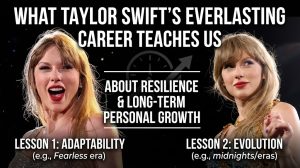
By analyzing the underlying principles that have sustained her artistic journey into 2026, individuals can extract valuable life lessons on how to navigate transitions, manage public and private challenges, and build a lasting foundation for self-improvement.
1. Embracing Natural Evolution Over Sudden Reinvention
A common misconception about long-term success is that it requires radical, forced transformations to shock an audience or stay ahead of trends. However, sustainable growth is rarely built on shock value. Instead, true resilience stems from allowing oneself to undergo a series of natural evolutions that reflect different stages of life, maturity, and experience.
Throughout her career, Swift has transitioned across diverse musical styles—moving from country roots to pop, folk, alternative, and synth-driven production. Rather than appearing opportunistic, these shifts succeeded because they aligned with her authentic personal development. Each creative chapter served as a reflection of her current perspective, confidence, and maturity level.
Key Lesson for Personal Growth:
Forcing a complete reinvention to please external expectations often leads to burnout and a loss of identity. Real personal growth occurs when you allow your career, goals, and lifestyle to evolve naturally alongside your age and lived experiences. Progress does not require erasing your past; it requires building upon it.
2. Navigating Vulnerability as a Core Strength
In many professional and personal environments, vulnerability is mistakenly viewed as a weakness or a liability. There is a frequent temptation to flatten complex emotions into something simple, mask difficulties, or present an unblemished facade to the world. However, hiding from challenges limits emotional depth and prevents genuine connection with others.
The endurance of Swift’s catalog relies heavily on emotional honesty. By turning private emotions—such as heartbreak, isolation, ambition, regret, and healing—into universal experiences, she demonstrates that acknowledging vulnerability is a strategic asset. A single detailed narrative can act as a mirror for millions, proving that personal struggles are rarely isolated incidents.
Key Lesson for Self-Improvement:
Resilience is not the absence of difficult emotions; it is the willingness to confront and process them honestly. Embracing vulnerability allows individuals to understand their boundaries, learn from failures, and establish deeper relationships with peers, mentors, and communities. Honesty with oneself is the first step toward lasting mental fortitude.
3. Developing an Emotional Map for Life’s Milestones
As individuals progress through adulthood, their relationship with past experiences inevitably alters. A challenge that felt insurmountable in early youth may look entirely different when viewed through the lens of maturity. Long-term personal growth requires the ability to revisit past chapters of life without being consumed by them, using them instead as indicators of progress.
Listeners frequently report that long-standing creative catalogs function as emotional time capsules or maps. A narrative or lesson that once resonated with a teenager experiencing young love can be revisited years later with an entirely fresh level of understanding. Over time, themes centered on romantic heartbreak often give way to deeper reflections on independence, ambition, forgiveness, and self-discovery.
Key Lesson for Life Strategy:
Your personal history is an evolving document. Revisiting past journals, career milestones, or failed projects allows you to measure how much you have survived and how much your perspective has shifted. Recognizing your own growth builds the necessary confidence to face future uncertainties.
4. Prioritizing Substance Over Fleeting Trends
The modern digital economy places immense pressure on individuals and organizations to chase every passing trend, viral movement, or algorithmic shift. While short-term attention can be obtained by mimicking what is popular at any given moment, this strategy rarely yields long-term stability. When platforms change and trends shift, those without a solid foundation often find their relevance disappearing quickly.
The durability of any great legacy lies in maintaining a consistent core while allowing peripheral elements to modernize. For a storyteller, that core is the narrative ability to make people feel seen and understood. By focusing on high-quality delivery and genuine human connection, it becomes unnecessary to constantly alter one’s fundamental identity to fit the narrative of the week.
Key Lesson for Professional Development:
Focus on developing durable, transferable skills rather than chasing temporary industry gimmicks. Consistency, integrity, and high-quality performance remain valuable across all market cycles. When you establish a reputation built on substantive value, you protect yourself from the volatility of changing environments.
5. Fostering Community and Collaborative Networks
No individual achieves long-term resilience entirely in isolation. True endurance is supported by the communities, networks, and shared systems that grow around a common purpose. When people feel a shared ownership or deep connection to a vision, they engage actively—analyzing, interpreting, debating, and carrying the core message forward.
Sustainable impact creates a shared cultural language. It invites ongoing conversation and converts passive observers into active participants. When an audience treats a body of work not merely as a commercial product but as a collaborative manual for navigating life, the longevity of that work becomes self-sustaining.
Key Lesson for Community Building:
To build a lasting project, business, or personal brand, focus on creating genuine value for your network. Encourage dialogue, respect diverse interpretations, and cultivate environments where others feel seen and valued. A supportive community acts as a powerful buffer during times of crisis or transition.
6. The Power of Creative Control and Autonomy
A critical component of resilience is maintaining ownership over your trajectory, decisions, and creative output. Without autonomy, individuals are highly vulnerable to external pressures, shifting corporate priorities, or the dictates of superiors who may not share the same long-term vision.
Asserting creative control and advocating for the ownership of one’s work demonstrates that commercial power and intricate, personal detailing can co-exist. Protecting your intellectual property and professional identity ensures that your growth remains aligned with your personal ethics and long-term objectives.
Key Lesson for Career Management:
Strive to gain greater autonomy and decision-making power within your field. When you possess control over your output, you gain the freedom to make choices that favor long-term sustainability over immediate, shortsighted gains.
Conclusion: The Ultimate Measure of Artistry and Growth
Ultimately, the clearest sign of lasting artistry and successful self-improvement is when your work, lessons, and identity do not just belong to the specific moment they were introduced. Instead, they must continue to live, breathe, and adapt alongside the people who carry them forward into the future. By embracing natural evolution, prioritizing emotional honesty, and focusing on durable values, anyone can build a resilient framework for lifelong personal growth.
Frequently Asked Questions (FAQs)
What is the difference between natural evolution and forced reinvention?
Natural evolution occurs when your goals, style, and strategies shift in alignment with your actual life stage, maturity, and accumulated experiences. Forced reinvention involves changing your identity or core values solely to chase external validation, satisfy market trends, or shock an audience, which frequently leads to inconsistency and burnout.
How does practicing vulnerability contribute to professional resilience?
Practicing vulnerability does not mean oversharing personal details indiscriminately. In a professional context, it means acknowledging limitations, learning openly from failures, communicating with emotional honesty, and addressing complex challenges directly. This fosters authentic connections, builds trust within teams, and establishes a realistic path for growth.
Why is focusing on evergreen value better than following viral trends?
Viral trends offer rapid, short-term visibility that vanishes as soon as the next trend emerges. Focusing on evergreen value—such as core professional skills, emotional intelligence, and substantive content—ensures long-term stability. This approach allows you to remain relevant and secure regardless of platform changes or market volatility.
How can I use my past failures as an emotional map for growth?
You can use past experiences as a map by periodically reviewing how you handled previous challenges and noting how your perspective has changed since then. Realizing that a situation which once caused significant distress is now manageable provides empirical proof of your resilience, helping you face current obstacles with greater calm.
What role does community play in sustaining long-term personal projects?
A community provides a network of support, feedback, and shared engagement. When people connect genuinely with your vision or work, they help sustain it through collaborative discussion, advocacy, and word-of-mouth support. This collective investment ensures that your project remains viable and impactful over a long period.