
The recent announcement of Meghan Markle’s upcoming European trip has once again placed the Duchess of Sussex at the center of a global media whirlwind. Whether such travel is viewed through a lens of professional ambition or personal exploration, the intense public scrutiny surrounding high-profile figures serves as a stark reminder of the complexities inherent in modern travel. For the average person, maintaining a sense of self and healthy personal boundaries while navigating unfamiliar environments is a challenge that requires intentionality, grace, and strategic planning.
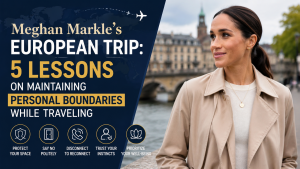
When we observe the public lives of those who constantly operate within the international spotlight, it becomes clear that the pressure to be constantly available, polished, and performative can be overwhelming. Taking inspiration from the challenges of high-stakes travel, we can derive valuable lessons on how to protect our energy, maintain our privacy, and ensure that our personal journeys—whether for business or pleasure—remain authentic and fulfilling.
1. The Art of Curating Your Digital Footprint
In an era where every movement can be tracked and commented upon in real-time, the most effective way to maintain personal boundaries is to be deliberate about what you share. High-profile figures often find themselves in a trap where every public appearance is analyzed for deeper meaning, often leading to a loss of control over their own narrative.
For the everyday traveler, this is a lesson in digital minimalism. While it is tempting to broadcast every moment of a European excursion on social media, doing so invites unsolicited opinions and can strip a trip of its private, restorative nature. By choosing to live in the moment rather than curating it for an external audience, you reclaim your experience. True self-improvement during travel comes from the connections you make in person, not the validation you receive from a screen. Establishing a rule of delayed posting or keeping certain destinations entirely off-line is a powerful tool for protecting your mental health and ensuring that your travels belong to you alone.
2. Navigating External Expectations versus Personal Goals
Conflict often arises when the expectations placed upon us by society, family, or our professional circles clash with our own desires. When a high-profile individual embarks on a trip, observers often assign motives to their actions, assuming that every journey must be a calculated move or a response to a rival. This external pressure can be stifling.
To maintain personal boundaries, one must develop the ability to distinguish between internal motivation and external noise. When you plan a trip, ask yourself: Am I doing this for my own growth, relaxation, or professional development, or am I reacting to the movements of others? Learning to stay centered in your own goals—and ignoring the urge to compete or respond to perceived slights—is essential for peace of mind. By focusing on your own itinerary and objectives, you neutralize the power that external expectations have over your emotional well-being.
3. Prioritizing Authentic Engagement Over Performance
There is a significant difference between traveling to engage with a culture and traveling to be seen. Modern travel culture often emphasizes the performative aspect: the perfect photo, the high-status location, and the appearance of being “in the know.” However, this approach is emotionally draining and unsustainable.
True personal growth occurs when we prioritize authentic engagement. This means visiting a museum because you are genuinely interested in art, not because it provides a good backdrop for a social media update. It involves taking the time to listen to local perspectives, enjoying quiet moments of reflection, and embracing the imperfections of travel. When you stop performing for others, your stress levels decrease significantly. You begin to view travel not as a series of events to be documented, but as an opportunity for genuine self-discovery. By shifting your focus from the “what” to the “why,” you create a boundary that protects your experience from becoming a hollow exercise.
4. Establishing Physical and Mental Space
Even in the most bustling European cities, it is possible to carve out moments of solitude. A common mistake during travel is the “all-or-nothing” approach, where every hour is packed with activities to maximize the value of the trip. This inevitably leads to burnout and a loss of personal focus.
Personal boundaries also apply to how you structure your time. It is vital to schedule downtime—moments where you are entirely unreachable and uncommitted. Whether it is a quiet morning with a book in a local park or an evening spent in a secluded corner of a café, these pockets of solitude are where you reset your internal compass. By treating your time as a limited and precious resource, you prevent the environment around you from dictating your schedule. Protecting your energy is just as important as protecting your passport; without it, you cannot fully appreciate the beauty of the places you visit.
5. Cultivating Resilience Against Public Critique
One of the most difficult aspects of being in the public eye is the inevitability of criticism. Regardless of your actions, there will always be those who misinterpret your motives or project their own insecurities onto your behavior. The lesson here is the development of a thick skin combined with a soft heart.
Resilience is the ability to acknowledge the opinions of others without letting them alter your fundamental truth. When traveling, you may face unexpected setbacks, judgment from others, or internal doubts. Maintaining boundaries means understanding that other people’s opinions of your trip—or your life—are reflections of them, not you. By practicing radical self-acceptance, you insulate yourself from the need for external approval. You learn that your worth is not tied to how well your trip is received by others, but by the integrity with which you conduct yourself.
Conclusion
The scrutiny surrounding global figures like Meghan Markle highlights the intense pressure to conform to public expectations. However, by examining these challenges, we can learn how to protect our own experiences. Maintaining personal boundaries while traveling is not about closing yourself off from the world; it is about ensuring that you remain the author of your own journey. By curating your digital footprint, focusing on your own goals, prioritizing authenticity, protecting your time, and building resilience, you can transform any trip into a meaningful exercise in self-improvement.
Frequently Asked Questions (FAQs)
Q: How can I effectively disconnect from social media while traveling in Europe? A: Start by setting a “no-phone” rule for certain times of the day, such as during meals or while exploring museums. You might also consider leaving your main device at the hotel during specific excursions, carrying only a basic camera or a paper map.
Q: Why do I feel pressure to compete with others when I see their travel photos online? A: This is a common phenomenon often referred to as “social comparison.” Remember that social media represents a curated, idealized version of reality. Comparing your authentic, messy, and real-life experiences to someone else’s highlight reel is inherently unfair to yourself.
Q: How can I set better boundaries with travel companions who have different expectations? A: Communication is key. Before the trip begins, discuss individual goals and expectations. It is perfectly acceptable to plan “me-time” sessions where each person pursues their own interests, ensuring that everyone returns from the trip feeling refreshed rather than drained by compromise.
Q: Is it possible to travel authentically while still visiting popular tourist destinations? A: Absolutely. The key is in your approach. Instead of trying to hit every major landmark for the sake of ticking a box, choose one or two areas that genuinely interest you and spend more time exploring the side streets, local markets, and less-traveled paths near those landmarks.
Q: How does maintaining boundaries improve the long-term quality of my travel experiences? A: When you set boundaries, you are prioritizing your own mental and physical well-being. This prevents travel fatigue and ensures that you remain open to new experiences and genuine connections, making your memories of the trip more vivid and rewarding for years to come.