
In the modern professional landscape, the trajectory of a career is rarely a straight line. Even for those who have operated at the highest levels of global influence, the environment can shift rapidly, leaving once-guaranteed access and resources suddenly out of reach. When doors that were previously held open begin to close, the resulting silence can be jarring. However, these moments of professional transition—whether occurring in the public eye or within the confines of a corporate boardroom—offer critical lessons in resilience, the necessity of adaptive networking, and the importance of rebuilding influence through merit rather than past status.
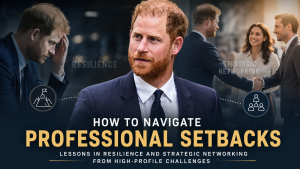
Navigating a setback where established influence no longer commands the same immediate response requires a fundamental recalibration of expectations. Often, individuals who have been accustomed to a lifetime of automatic support struggle when that support is replaced by bureaucracy or indifference. This phenomenon is a common hurdle in high-stakes environments, yet it is how one responds to these limitations that defines their long-term professional longevity. The ability to pivot from an entitlement-based mindset to a proactive, negotiation-focused approach is the hallmark of true leadership.
The Psychology of Transitioning Beyond Past Roles
When a professional identity is tied closely to a specific title, role, or affiliation, any shift in that status can feel like a profound loss of power. Psychologists note that when the external validation—the “automatic calls answered”—disappears, it often triggers a period of uncertainty. To move past this, one must first accept that the landscape has fundamentally changed. Clinging to the protocols of the past only serves to delay the development of the skills needed to navigate the current environment.
The reality of any professional role is that it is contingent upon current contributions rather than historical prestige. Whether in government, corporate, or creative industries, resources are finite. When the justification for support is no longer rooted in an active official capacity, that support must be earned through meticulous planning and a demonstrated commitment to the current task. For those experiencing this shift, the most effective path forward is to replace the demand for “automatic” access with a strategy built on building new alliances and demonstrating current value.
Strategic Networking in an Era of Changing Priorities
In a world where digital connectivity has made everyone more accessible, it is paradoxically more difficult to get the right people on the phone. True strategic networking is no longer about who you know, but about how you maintain those relationships without relying on past authority. When faced with administrative hurdles or a lack of responsiveness, high-profile figures must learn to navigate through intermediaries, follow standard procedures with patience, and build a case for their needs that resonates with those holding the decision-making power.
Instead of interpreting silence as a personal slight, resilient professionals interpret it as a signal to adjust their approach. This involves:
-
Understanding the Protocol: Every organization has standard operating procedures. Ignoring these in favor of bypassing channels rarely works in the long term. Learning the “how” and “why” behind the rules can often reveal new ways to navigate them.
-
Building Multilateral Support: Influence is most effective when it is decentralized. Relying on one source of authority or one type of relationship is a point of failure. Developing a broader network of supporters who can advocate for your goals from different angles is essential for success.
-
Demonstrating Practical Necessity: Whether it is securing resources for security or pitching a new project, the argument must be grounded in facts, not status. Clearly articulating the “why” and the tangible benefits of the request—or the risks of ignoring it—is far more persuasive than a request based on expectation.
Building Resilience Through Public Advocacy
One of the most effective ways to regain lost momentum is through mission-driven work. When an individual’s professional standing is challenged, focusing on a cause larger than oneself can restore a sense of agency and public trust. By dedicating energy to charitable causes, children’s advocacy, or global projects, one creates a new narrative. This shift from “receiving support” to “providing value” is a powerful way to redefine one’s public identity.
This strategy is not just about image management; it is about creating a track record that is undeniable. When a professional focus is shifted toward tangible outcomes, it becomes easier to secure the cooperation of others. If the goal is to navigate a complex environment, the most effective tools are consistency, patience, and a proven track record of delivering results. This is how leaders rebuild their influence in an era that is increasingly skeptical of authority that is not backed by action.
The Cautionary Tale of Assuming Continuity
The predicament of high-profile figures who struggle to transition away from past roles serves as a powerful cautionary tale. It underscores the reality that influence is not a permanent asset—it is a renewable resource that must be continuously cultivated. Those who expect their past status to permanently command immediate responses often find themselves disappointed. Conversely, those who understand that they must periodically re-prove their relevance are the ones who continue to thrive regardless of their official standing.
Administrative rigor is the invisible architecture of every industry. From security planning to complex negotiations, nothing is truly automatic. Every successful outcome is the result of thousands of small, behind-the-scenes actions. For those attempting to navigate their way through a period of professional transition, the lesson is clear: humility and procedural diligence are not signs of weakness. They are the essential requirements of anyone who wishes to maintain influence in a world where the only constant is change.
The Path Forward: Balancing Visibility and Vulnerability
As individuals move into a new chapter of their careers, they must find the balance between maintaining their public visibility and managing their own security and professional infrastructure. This requires a level of pragmatism that is often difficult to adopt after years of being “managed” by others. Taking personal responsibility for one’s logistics, planning, and communication strategies is a significant step toward true independence.
The upcoming challenges should be viewed as opportunities to refine these processes. Instead of reacting to bureaucratic delays with frustration, the proactive leader anticipates them. Instead of focusing on the lack of previous privileges, they focus on the freedom that comes with self-determined planning. This is the essence of professional maturity: the ability to handle the realities of the situation while continuing to pursue one’s goals with unwavering intent.
Conclusion
In conclusion, navigating professional setbacks is a process of unlearning old habits and embracing new realities. Resilience is not about enduring the same way one always has; it is about evolving to meet the demands of a new environment. By focusing on strategic networking, demonstrating the merit of one’s requests, and remaining dedicated to mission-driven work, it is possible to transform a moment of uncertainty into a foundation for future success. Influence may look different in each stage of a career, but it remains accessible to those who are willing to do the work to maintain it.
Frequently Asked Questions (FAQs)
Q1: How can I maintain professional influence when my status or job role changes? A1: Influence is best maintained by shifting your focus from your previous title to the value you currently provide. Build a diverse network of supporters, stay mission-driven, and demonstrate a consistent track record of results rather than relying on past affiliations.
Q2: What is the best way to handle bureaucracy and lack of responsiveness in a professional setting? A2: Approach administrative hurdles with patience and diligence. Understand the underlying protocols, provide clear and factual justifications for your needs, and use established channels rather than attempting to bypass them, as this usually creates more friction.
Q3: Why is it important to adopt a proactive approach to security and logistics? A3: When resources are no longer automatically allocated, taking personal responsibility for your own planning and logistics ensures that you are not reliant on external responsiveness. This proactive stance reduces vulnerability and increases your autonomy in high-pressure situations.
Q4: How does “angle-shifting” help in personal branding during a career transition? A4: Angle-shifting involves repurposing your public profile by connecting your interests to broader, evergreen societal issues. By aligning your brand with causes or advice that benefit others, you move from a position of needing attention to a position of offering expertise and leadership.
Q5: Is it possible to regain a sense of status after stepping away from a high-profile role? A5: While you may not return to the same specific role, you can build a new form of status based on your independent contributions. Resilience, successful management of current projects, and a focus on long-term impact are key to establishing a new, often more sustainable, form of influence.