
The sudden and tragic passing of NASCAR champion Kyle Busch at the age of 41 has left the racing community and his fans in a state of profound shock. As details emerge from the heartbreaking 911 audio recorded at the General Motors technical facility in Concord, North Carolina, the focus often turns to the fragility of life. In his final moments, while struggling with a severe and rapid decline in health, Busch remained a symbol of the high-stakes world he inhabited—a world where physical endurance, mental acuity, and extreme pressure are the baseline for success.
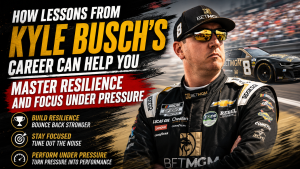
While we await further medical reports to understand the specific cause of this tragedy, the legacy Busch leaves behind serves as a powerful case study in human performance. Whether you are navigating a high-pressure corporate environment, managing the complexities of a personal project, or simply trying to build a more resilient mindset, the career of a two-time Cup Series champion offers profound lessons. By analyzing how elite athletes maintain focus when the stakes are at their highest, we can extract actionable advice to improve our own lives and professional resilience.
The Architecture of High-Stakes Focus
In the world of NASCAR, a driver cannot afford to lose focus for even a fraction of a second. The environment inside a racing simulator or a high-speed vehicle is physically and mentally grueling. Temperatures inside the cockpit can reach extreme levels, and the demand for precise decision-making while moving at over 150 miles per hour requires a level of cognitive control that most people never experience.
Kyle Busch’s ability to remain competitive at the pinnacle of his sport for over two decades was not just a result of natural talent; it was the result of a disciplined psychological framework. For the average person, “pressure” usually manifests as meeting a deadline, preparing for a public presentation, or managing a crisis at home. The lesson here is the management of physiological arousal. When you feel “heat” in your own life—whether it is stress or anxiety—the ability to keep your pulse steady and your mind clear is a skill that can be developed. Elite performers practice visualization and sensory control, allowing them to isolate their focus on the immediate task while ignoring the chaotic external environment.
Cultivating Resilience in the Face of Uncertainty
Resilience is often misunderstood as simply “toughing it out.” However, in the context of professional racing, true resilience is the ability to recover from setbacks—be it a mid-race accident or a career-long losing streak—and return to the starting line with the same intensity. Busch’s career was defined by his tenacity. He was known for his aggressive style and his refusal to back down from a challenge.
In our daily lives, building resilience means acknowledging that obstacles are not interruptions to our goals; they are part of the process. When things go wrong, the instinct is often to panic or withdraw. A resilient mindset involves shifting from a reactive state—where you are at the mercy of the crisis—to a proactive state, where you assess the variables and execute the next best step. This is how we transform “dire needs” into manageable situations. By keeping your emotions separate from the problem-solving process, you ensure that you are making decisions based on reality rather than fear.
Maintaining Performance Under Physical and Mental Strain
The events that led to the emergency response in Concord remind us that even the most conditioned athletes are vulnerable to sudden health crises. However, the rigor required to reach the top tier of any profession demands a level of health maintenance that many neglect. Busch’s dedication to testing, simulation, and physical training highlights the necessity of self-care as a prerequisite for professional success.
If you are pushing yourself to the limit in your career, you must recognize that your body is your primary asset. Resilience is not just a mental state; it is a physiological one. Fatigue impairs judgment, slows reaction times, and diminishes your ability to handle stress. The lesson from the track is that you must prioritize your health and safety protocols—not as an afterthought, but as a core component of your operational strategy. Regular check-ups, recognizing the signs of burnout, and knowing when to step back are not signs of weakness; they are the marks of a professional who plans to have a long and successful career.
Developing a Routine for Consistency
One of the greatest predictors of long-term success is the establishment of a consistent routine. NASCAR drivers operate on a strict schedule of practice, qualification, and race days. This repetitive cycle builds muscle memory and allows the driver to automate mundane tasks, freeing up mental bandwidth for complex decision-making during the race.
You can apply this to your own life by creating “standard operating procedures” for your daily tasks. When your environment and habits are structured, you reduce the amount of “decision fatigue” you experience throughout the day. By automating the small, recurring parts of your life, you save your energy for the moments when you truly need to be at your best. This is the secret to sustained focus: you do not rely on willpower alone; you rely on the structure you have built around yourself.
Learning from the Unexpected
The most difficult lesson to accept is that even with the best planning, life is unpredictable. Kyle Busch was preparing for upcoming races, including the NASCAR Craftsman Truck Series and the iconic Coca-Cola 600, when his health crisis occurred. He was actively planning for the future, demonstrating that we never truly know when our current chapter will come to a close.
This reality should not lead to despair, but rather to a refined sense of urgency. It encourages us to live with intention. If you have goals, pursue them now. If you have relationships you value, invest in them today. The tragedy of a life cut short serves as a stark reminder that while we should train like champions, we should also live with the grace and appreciation for the present moment. Resilience is ultimately about the capacity to continue growing despite the inherent uncertainty of existence. By channeling the drive of an athlete into our personal development, we can ensure that we are living fully, focusing on what matters, and building a legacy that endures.
Frequently Asked Questions (FAQs)
1. How can I apply athletic resilience to a high-stress office environment? To apply athletic resilience, treat your work environment like a high-stakes track. Develop standard routines to reduce decision fatigue, practice deep-breathing techniques to manage physical stress responses, and focus on the immediate, actionable task rather than the overall “noise” of the situation.
2. Why is mental focus considered a learnable skill? Mental focus is a cognitive muscle. Like any other muscle, it strengthens with repetition. By practicing mindfulness, setting time-blocked goals, and intentionally eliminating distractions, you can increase your attention span and improve your ability to concentrate under pressure.
3. What is the biggest mistake people make when trying to become more resilient? The biggest mistake is confusing endurance with avoidance. Resilience is not about ignoring stress or hiding from challenges; it is about engaging with them, learning from the adversity, and adjusting your strategy to ensure you can continue to function effectively in the future.
4. How does physical health impact professional performance? Physical health is the foundation of cognitive function. Sleep, nutrition, and exercise dictate how your brain processes information and handles stressors. Neglecting these areas will inevitably lead to a decline in decision-making quality and resilience over time.
5. What is the best way to handle unexpected life changes? When the unexpected happens, the best approach is to slow down and assess the facts. Remove emotional reactivity by focusing on the immediate next step. Staying present and objective allows you to navigate crises with the same level-headedness that a professional driver uses to navigate a sudden turn on the track.