
In the high-pressure environment of the National Football League, the margin between a championship-caliber team and a rebuilding squad is razor-thin. For professional athletes and organizations alike, the landscape is defined by constant volatility—roster cuts, sudden legal complications, injury setbacks, and the relentless pressure to perform at an elite level. When a star player’s availability is suddenly compromised, the ripple effects are felt throughout the entire organization, forcing coaches, front-office executives, and teammates to navigate complex career transitions. By examining the current uncertainty surrounding the Kansas City Chiefs and the recent developments involving wide receiver Rashee Rice, we can extract powerful lessons regarding personal resilience, adaptability, and the strategic management of professional transitions.
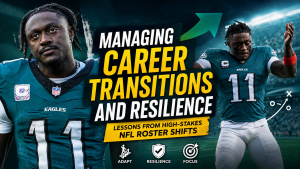
The Reality of Professional Volatility
The story of the Kansas City Chiefs navigating the sudden absence of a key playmaker serves as a masterclass in organizational agility. In any high-stakes career—whether on the football field or in the corporate boardroom—sudden, unforeseen obstacles are an inevitability rather than an anomaly. For the Chiefs, the reliance on Rashee Rice to anchor their receiving corps has been met with a significant hurdle: a 30-day jail sentence following a probation violation. This, coupled with a surgical procedure on his knee, has forced the team to reassess its immediate future and its long-term roster strategy.
For individuals in any career, this scenario mirrors the moments when a project is suddenly pulled, a key team member departs, or a professional goal is sidelined by circumstances outside of one’s control. The lesson here is clear: professional resilience is not merely about having a plan; it is about the internal capacity to pivot when that plan disintegrates. Teams that succeed are those that do not become paralyzed by the loss of a “key player” but instead view the void as an opportunity to pressure-test their depth and diversify their internal resources.
Navigating Uncertainty Through Strategic Adaptation
When news surfaced linking star receiver A.J. Brown to the Chiefs, it sparked widespread debate about whether the franchise should pivot toward an aggressive acquisition. Analysts like Albert Breer have pointed out that while the temptation to “circle back” and attempt a major trade is natural, the most resilient organizations often prioritize long-term vision over reactive decision-making.
In personal and professional development, “reactive decision-making” is often a trap. When we face a setback, our instinct is to seek the fastest, most expensive solution to patch the problem. However, the Chiefs’ hesitation reflects a deeper wisdom: the importance of evaluating existing assets before committing to radical changes. By leaning on developing talents like Xavier Worthy and Tyquan Thornton, the organization is testing its internal potential. Similarly, when navigating career transitions, it is often more beneficial to inventory one’s own dormant skills and underutilized internal network before assuming that a massive, external “trade” is the only path to success.
The Impact of Accountability on Professional Longevity
Rashee Rice’s current predicament—stemming from a 2024 highway incident involving high speeds and a multi-car collision—serves as a somber reminder of how personal actions directly influence professional trajectory. Accountability is the cornerstone of any career. In the professional world, the consequences of one’s actions can carry weight long after an initial mistake has been made.
For many young professionals, the journey to success is not just about raw talent or technical ability; it is about the discipline required to maintain one’s standing. When an individual’s professional narrative becomes overshadowed by off-the-field complications, the ability to recover depends entirely on their commitment to course correction. Rice’s admission of fault and cooperation with authorities provided a pathway for redemption, yet his subsequent probation violation highlights the difficulty of maintaining consistent, professional behavior under the scrutiny of the public eye. The takeaway for anyone striving for growth is that consistent, professional conduct is a prerequisite for sustained success. Without a foundation of personal accountability, even the most promising talents find their career growth hindered by the weight of their own history.
Building Resilience Against Future Disruptions
Resilience is not just the ability to endure a crisis; it is the ability to anticipate and build buffers against future disruption. The Chiefs are currently managing a delicate balance: they must field a competitive team for the upcoming season while simultaneously managing their salary cap and integrating new, unproven talent. This is a complex financial and logistical puzzle.
For the average professional, building this type of resilience involves three key components:
-
Diversification of Skills: Just as a team needs multiple receivers, a professional needs a diverse toolkit to remain valuable regardless of market fluctuations.
-
Financial and Resource Agility: Maintaining enough “buffer” (much like the Chiefs needing salary cap space) allows for strategic maneuvering when an opportunity—or a crisis—arises.
-
The Long-Term Mindset: Choosing not to overextend for a short-term fix is a vital skill. It requires the confidence to believe in the foundation that has already been built.
Managing the Intersection of Physical and Professional Health
The physical reality of professional sports provides a stark metaphor for the necessity of holistic well-being. Rice’s struggle with knee inflammation and his surgical “cleanup” procedure, running concurrently with his legal issues, illustrates the exhaustion of the human element in high-performance careers. Often, we treat our professional lives as separate from our physical or mental health, but the two are inextricably linked.
Burnout, injury, and emotional distress are the “knee injuries” of the corporate world. Ignoring these signs or failing to address them properly can lead to a prolonged period of ineffectiveness. The most successful professionals are those who recognize the need for maintenance—sometimes requiring a step back or a “cleanup” of their processes—to ensure that when the moment arrives to perform, they are at full capacity.
Conclusion
The situation in Kansas City is a reminder that professional life is rarely a straight line. Whether it is a star athlete dealing with legal consequences or a professional navigating a difficult market, the path forward is rarely defined by the size of the challenge, but by the quality of the response. By remaining disciplined, leveraging internal strengths, and maintaining a commitment to accountability, organizations and individuals alike can navigate even the most tumultuous transitions. Resilience is built in the quiet moments between the headlines, in the daily preparation, and in the refusal to be defined by a single, albeit major, setback.
Frequently Asked Questions (FAQs)
1. What are the primary lessons regarding career transitions from the Kansas City Chiefs’ situation? The primary lesson is the importance of internal evaluation. Instead of making reactive, high-cost decisions when a key resource is lost, it is often more effective to leverage existing depth, assess current assets, and maintain a long-term strategic focus.
2. How does accountability impact long-term professional success? Accountability is essential for career longevity. Actions that lead to legal or professional complications can derail years of hard work. Consistent, professional conduct and taking responsibility for mistakes are critical for regaining trust and ensuring future opportunities.
3. Why is it important to maintain “buffer” resources in one’s professional life? Similar to the Chiefs maintaining salary cap space to accommodate rookie classes or unforeseen needs, professionals should maintain a “buffer” of time, finances, and energy. This allows for agility and the ability to pivot when unexpected crises arise without making impulsive, detrimental decisions.
4. How does the concept of “angle-shifting” apply to professional resilience? Angle-shifting involves repurposing challenges into opportunities for growth. In the case of the Chiefs, the vacancy left by a key player is an opportunity to develop new talent. Professionally, this means viewing setbacks not as dead ends, but as opportunities to strengthen different areas of your expertise or professional network.
5. How can one balance immediate performance demands with long-term well-being? Balance is achieved by recognizing the need for regular “maintenance”—be it physical health, skill development, or mental rest. Ignoring these needs leads to burnout or prolonged ineffectiveness. Success requires a commitment to a holistic approach where professional output is supported by consistent personal and physical care.