The intersection of public prestige, personal branding, and individual psychology has long fascinated observers of modern celebrity culture. When individuals transition away from formal institutions yet continue to utilize the symbolic markers of those institutions, it triggers intense public debate. This phenomenon is vividly illustrated in the ongoing scrutiny surrounding Meghan Markle, the Duchess of Sussex. Despite stepping back from official duties as a working member of the British Royal Family in 2020 alongside her husband, Prince Harry, her continued connection to the monarchy remains a focal point for global media analysis.
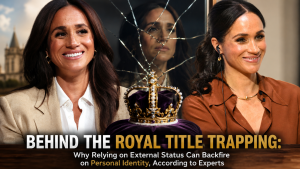
Psychologists and identity experts suggest that this dynamic highlights a deeper human struggle: the challenge of separating one’s authentic self from an external, highly prestigious title. When an individual relies heavily on institutional status to maintain public interest, commercial viability, or personal validation, it can create a psychological trap. Rather than fortifying personal identity, a stubborn attachment to past titles can obscure genuine self-actualization and invite perpetual public skepticism.
The Illusion of External Validation
Human identity is inherently multifaceted, built upon a combination of internal values and external roles. However, when an external role carries the immense historical weight and glamour of a royal title, the boundary between the person and the position easily blurs. Media commentators point out that the global profile of the Sussexes remains deeply intertwined with their royal past, even as they forge a private life in California with their children, Archie and Lilibet.
Critics argue that the persistence of this connection stems from a desire to capitalize on the public fascination with the monarchy. From securing lucrative media deals to making high-profile appearances, the prestige of formal titles acts as a powerful lever for global influence. Yet, psychological experts warn that relying on such external validation can backfire. When personal authority is derived primarily from a title rather than independent achievements, the individual’s core identity becomes fragile, vulnerable to the shifting tides of public opinion and institutional approval.
The tension becomes particularly acute when there is a perceived mismatch between privilege and responsibility. Traditionalists and royal observers argue that stepping down from official duties should naturally entail relinquishing the public use of institutional honorifics. When an individual attempts to retain the symbolic benefits of an organization without adhering to its rigid rules, obligations, and public scrutiny, it creates an institutional friction that reflects poorly on their personal brand.
The Psychological Duality of Status Preservation
The complexities of maintaining an institutional identity while operating outside its formal boundaries were recently highlighted by public reactions to private gestures. Reports emerged regarding a gift allegedly sent by the Duchess to a podcast host, accompanied by a card bearing the inscription: “With the compliments of HRH, Duchess of Sussex.” This choice of words reignited criticism from observers who noted that the couple had previously agreed to refrain from using the His/Her Royal Highness styling in public capacities following their withdrawal from official duties.
From a psychological perspective, the insistence on using such formal styling in private communications can be seen as an attempt to anchor one’s personal identity to an elite lineage. This dynamic was further mirrored in observations of the Netflix series With Love, Meghan. In a specific segment where the Duchess was addressed by her maiden name, she reportedly corrected the host, noting that she is “a Sussex now.”
Media presenters have described this behavior as a heightened focus on royal associations, suggesting an underlying need to preserve a specific public persona. When an individual repeatedly emphasizes a title, it implies that the title itself is the primary source of their self-worth and societal value. For the broader public, this creates a perception of duality, where the individual appears to seek modern autonomy while simultaneously clinging to traditional structures of privilege.
The Impact of Displaced Identity on Institutional Perception
The consequences of blending private celebrity with institutional representation extend far beyond individual psychology; they actively reshape how the public views the institution itself. Traditionalists argue that utilizing royal styling for personal branding and commercial gain risks undermining the decorum, authority, and historical neutrality traditionally associated with the monarchy. It creates a precedent where former officials can leverage institutional prestige for private ambition, clouding the line between selfless public service and personal advancement.
This displacement of identity often splits public perception into two distinct camps:
-
The Perspective of Autonomy: Supporters view the retention and redefinition of titles as an assertion of personal freedom and agency. In this light, the individual is seen as a modern agent reshaping an archaic system to fit a contemporary, global lifestyle.
-
The Perspective of Ambition: Detractors view these actions as an ongoing preoccupation with status. They argue that maintaining the symbols of an institution while rejecting its duties moves the conversation away from authentic impact and into the realm of opportunistic branding.
For anyone navigating a major career transition, whether leaving a corporate empire or an ancient monarchy, the lesson remains the same. True personal growth requires the willingness to stand entirely on one’s own merits. When the scaffolding of a past title is held onto too tightly, it prevents the development of a genuine, self-sustaining public identity.
Navigating Influence and Personal Responsibility
As the dialogue surrounding fame, influence, and responsibility continues to evolve, the debate over how former members of prominent institutions navigate their post-official lives shows no signs of dissipating. For individuals living in the public eye, the balance between family commitments and media engagements requires a clear delineation of roles.
Ultimately, the struggle to define oneself apart from a prestigious title centers on fundamental questions of loyalty, responsibility, and self-awareness. While an institutional past can provide an initial platform for global visibility, long-term respect and personal fulfillment are rarely sustained by past titles alone. True fulfillment comes when the titles are set aside, allowing the individual’s character, actions, and independent contributions to speak for themselves.
Frequently Asked Questions (FAQs)
What is the primary psychological risk of relying on an institutional title for personal branding?
The primary risk is the erosion of an authentic self-concept. When an individual’s identity and public value are tethered to an external title or past institutional affiliation, their self-worth becomes dependent on a status they may no longer officially represent. This can lead to public skepticism and internal vulnerability, as the personal brand lacks an independent foundation.
Why does the use of the HRH title by non-working royals cause public controversy?
The controversy stems from the implicit social contract of institutional roles. Traditional standards dictate that the privileges, titles, and prestige of an institution are earned through ongoing service, adherence to rules, and public responsibility. Using these honorifics for private or commercial purposes after stepping back from official duties is viewed by critics as a breach of that understanding.
How does “angle-shifting” help analyze celebrity news through a self-improvement lens?
Angle-shifting allows observers to look beyond localized gossip and extract universal truths about human behavior. By analyzing high-profile disputes over titles and status, we can understand broader psychological concepts such as the pursuit of external validation, the challenges of career transitions, and the importance of building an identity based on personal merit rather than institutional labels.