
The grand ballrooms of royal palaces are typically spaces defined by strict protocol, carefully rehearsed speeches, and an unyielding surface of perfection. For generations, the public has viewed the British royal family through a lens of stoicism, where personal struggles are kept behind closed doors and public appearances remain impeccably composed. However, a profound shift occurs when the heavy armor of royal duty cracks, revealing the raw, vulnerable human experiences underneath.
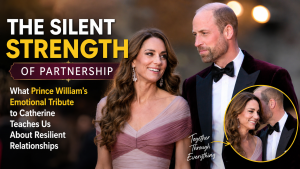
During a recent high-profile charity evening at Windsor Castle, an unexpected emotional exchange between Prince William and Catherine, the Princess of Wales, captivated the distinguished guests in attendance and offered a profound masterclass in modern relationship resilience. The moment transcended the boundaries of royal tradition, providing universal insights into how partnerships can survive, heal, and thrive under immense external pressure.
The Illusion of Absolute Composure
To the outside world, high-achieving couples often appear entirely untouchable. On this particular evening, surrounded by diplomats, military leaders, and global charity representatives in formal black-tie attire, the Prince and Princess of Wales epitomized this exact standard. They navigated the room with their characteristic warmth and poise, greeting supporters and executing their roles flawlessly.
This outward display highlights a common phenomenon in contemporary society: the curated front. Whether it is a royal couple operating on the world stage or a professional couple managing high-stress careers, human beings are remarkably adept at projecting stability even when the internal landscape is fractured.
Behind the scenes, the reality for the royal couple had been defined by an accumulation of intense pressures. From relentless global media scrutiny and public speculation to the deeply personal and frightening challenges of Catherine’s recent health journey, the emotional toll was unprecedented. Palace insiders have noted that Prince William previously stepped back from various official duties to prioritize shielding his wife and children from the relentless public spotlight. This reality serves as a stark reminder that no amount of status, privilege, or wealth can exempt a family from the fundamental vulnerabilities of illness, fear, and exhaustion.
The Power of Strategic Vulnerability
The turning point of the evening arrived during Prince William’s closing remarks. After delivering a traditional address praising healthcare workers, volunteers, and mental health advocates, the future king paused completely. The sudden silence altered the energy of the entire ballroom. Standing at the podium, he stepped away from his prepared notes, looked directly at his wife, and uttered a deeply personal phrase:
“Thank you… for never letting me fall.”
In a world that frequently confuses stoicism with strength, this public acknowledgment was revolutionary. For a relationship to remain resilient over the long term, both partners must possess the capacity for vulnerability. True emotional endurance does not stem from pretending that everything is fine; it develops when one partner can openly admit to the other—and to themselves—that the weight of their circumstances has become too heavy to carry alone.
By openly acknowledging that he had faced moments of near-collapse under the immense burdens of his institutional role and family anxieties, Prince William modeled a crucial component of relationship longevity: the elimination of the ego. When individuals drop the demand to appear constantly invincible, they create a safe space for genuine emotional connection to anchor the partnership.
Shared Burden-Bearing in High-Stress Environments
Witnesses at the event detailed a subsequent quiet interaction where the Prince joined the Princess, gently taking her hand without performance or spectacle. Observers noted that the conventional royal titles seemed to vanish completely, leaving behind two individuals who had navigated a profound storm side by side. William reportedly whispered an additional admission:
“You carried all of us when I couldn’t carry myself anymore.”
This specific dynamic illustrates the concept of alternating strength within a resilient partnership. In any long-term relationship, crisis situations rarely impact both individuals in the exact same manner or at the exact same time. A healthy union functions as a dynamic support system where the responsibility of holding the foundation secure shifts depending on who has the capacity to bear it.
During seasons when one partner is emotionally, physically, or psychologically depleted, the other steps forward to anchor the family unit. This is not a permanent imbalance, but rather a fluid, cyclical distribution of support. Catherine’s ability to serve as an emotional anchor during a period when she was simultaneously confronting her own severe personal health battles demonstrates an extraordinary depth of psychological resilience—one that preserved the stability of her immediate family.
Authentic Gratitude as an Emotional Anchor
A core takeaway from this viral interaction is the vital necessity of explicit, targeted gratitude. In the daily routine of managing crises, raising children, and meeting professional obligations, couples frequently forget to validate one another’s sacrifices. The emotional labor expended to keep a family functioning can easily become invisible.
Expressing deep gratitude serves several critical functions in a relationship:
-
Validates Invisible Effort: It recognizes the silent sacrifices, late-night anxieties, and emotional restraint required to hold a family together during a crisis.
-
Reinforces the Partnership Bond: It shifts the perspective from two individuals enduring separate hardships to a unified team conquering a shared challenge.
-
Replenishes Emotional Reserves: Hearing an explicit acknowledgment of one’s support provides the psychological fuel necessary to continue navigating future uncertainties.
When Prince William chose to verbalize his appreciation, he did not offer a generic compliment. He directly credited his partner with keeping him anchored. For any couple navigating high-stress environments, taking the time to look a partner in the eye and acknowledge their specific role in surviving a difficult season is essential to preventing emotional burnout and resentment.
Universal Life Lessons from a Royal Crisis
The emotional scene at Windsor Castle offers valuable takeaways for anyone striving to build a resilient relationship in the face of modern life’s complexities:
1. Prioritize the Core Partnership Above External Expectations
When external pressures mount—whether from career demands, extended family dynamics, or societal scrutiny—the primary relationship must be treated as a sanctuary. Prince William’s decision to temporarily reduce his public-facing duties to protect his wife and children underscores a vital truth: external obligations must occasionally yield to preserve the internal health of the family.
2. Recognize That True Strength Lies in Interdependence
The hyper-independent mindset of modern culture often suggests that needing someone else is a sign of weakness. A truly resilient relationship embraces interdependence, understanding that two individuals are far more capable of weathering a crisis together than either would be in isolation.
3. Maintain Spaces for Private Cohesion
Despite being surrounded by hundreds of guests in a historic ballroom, the interaction between the royal couple remained deeply intimate and focused entirely on their shared reality. Couples must cultivate the ability to tune out the surrounding noise and focus entirely on validating and supporting one another when it matters most.
Frequently Asked Questions (FAQs)
What defines a resilient relationship during a major life crisis?
A resilient relationship is characterized by emotional flexibility, open communication, and the ability to share burdens fluidly. Instead of fracturing under stress, resilient couples lean into one another, allowing the partner with more immediate capacity to support the one who is temporarily depleted.
Why is vulnerability considered a strength in high-achieving couples?
Vulnerability removes the exhausting pressure of maintaining a perfect image. When high-achieving individuals admit their limitations to their partners, it fosters deeper trust, reduces psychological isolation, and creates a secure foundation where both people feel safe to express fear or exhaustion.
How can couples practice alternating strength when both feel overwhelmed?
When both partners are experiencing high stress, communication is vital. Couples should explicitly discuss their current emotional bandwidth, prioritize essential tasks, delegate or eliminate non-essential pressures, and intentionally grant each other grace for imperfections during the crisis period.
What role does explicit gratitude play in preventing relationship burnout?
Explicit gratitude ensures that a partner’s sacrifices and emotional labor do not go unnoticed. Regularly validating each other’s efforts builds emotional reserves, fosters mutual respect, and prevents the development of resentment, which is one of the leading causes of relationship deterioration under stress.